In the world of eco-friendly packaging, there is a lot of noise. You see terms like “Oxo-degradable,” “Photodegradable,” and “Green” thrown around loosely. But for a business owner in India, or a conscious consumer in Ujjain, there is only one term that carries legal and environmental weight: Certified Compostable.
At Avantika Bio Polymers, we don’t just say our bags are green. We have the science—and the certificates—to prove it. Here is why that distinction protects both the planet and your business.
1. The “Greenwashing” Trap
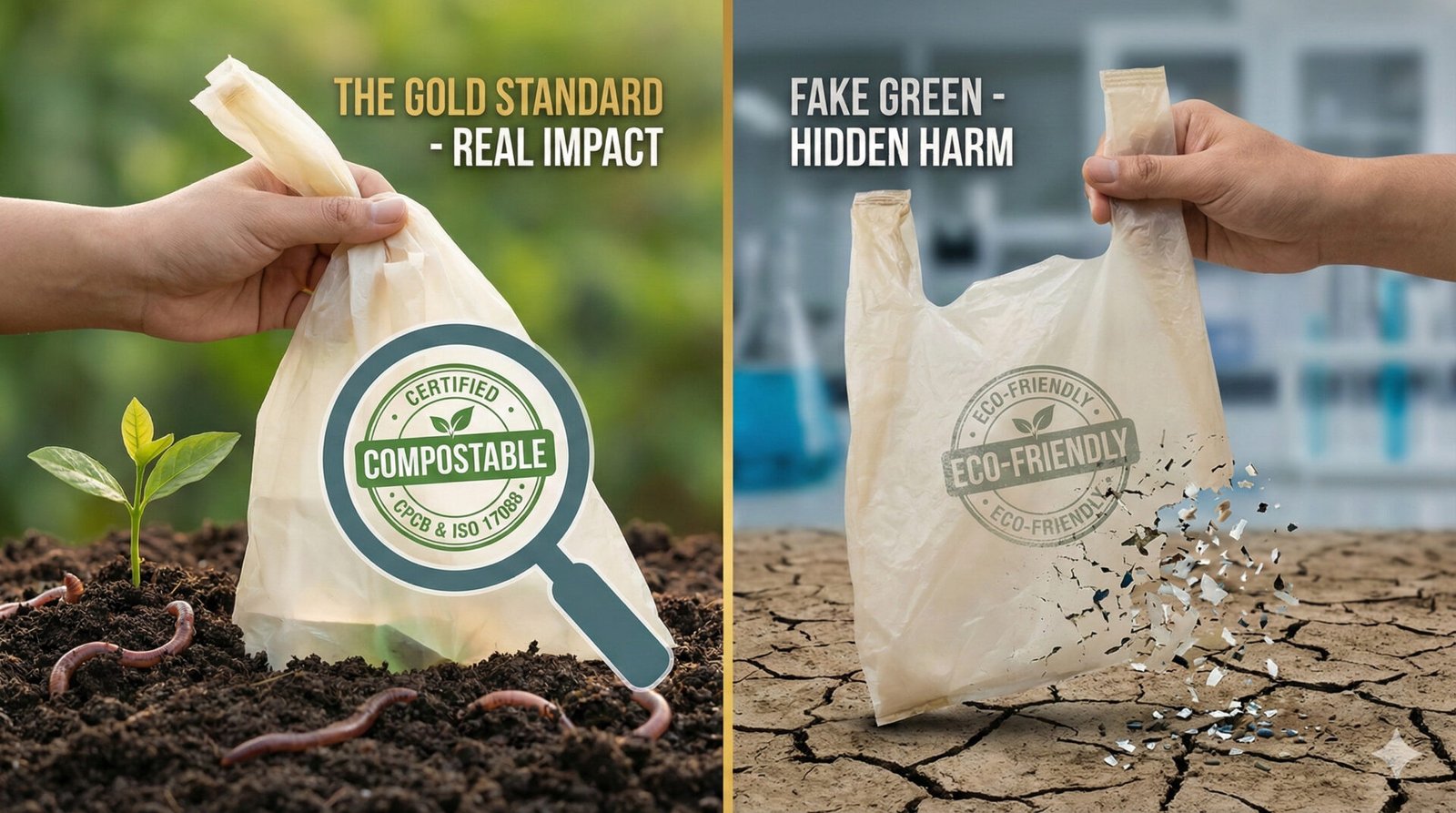
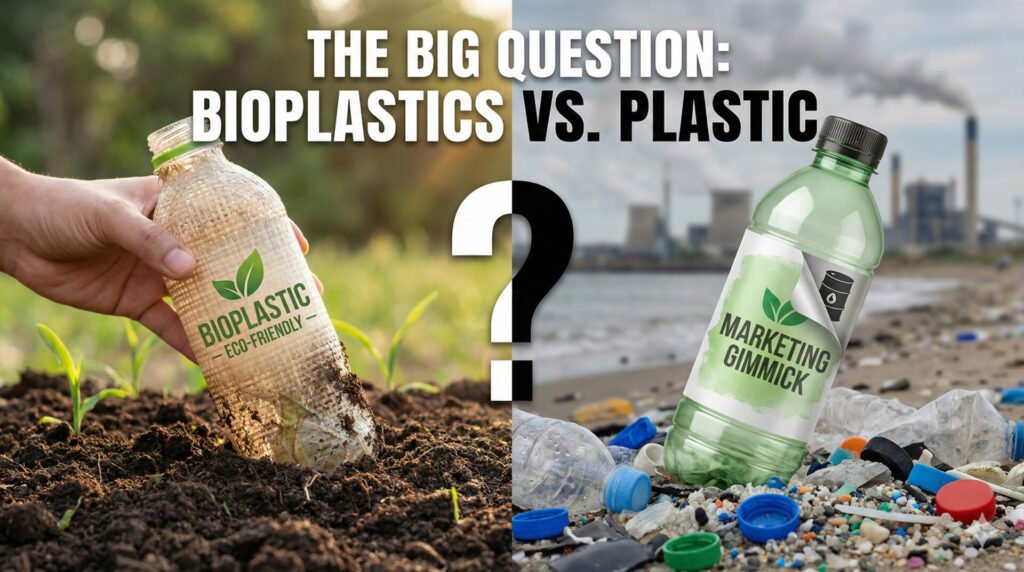
Many “fake” eco-bags are just regular plastic mixed with additives that make the bag break into tiny invisible pieces (microplastics) faster. This is dangerous. It doesn’t solve the problem; it just hides it.
The Difference: A certified compostable bag doesn’t just fragment. It undergoes a chemical change, completely converting into organic matter.
Our Promise: When we say “compostable,” we mean that if you bury this bag, you won’t find any plastic left behind—micro or macro.
2. The Seal of Trust: CPCB & ISO Standards
In India, the Central Pollution Control Board (CPCB) is the ultimate authority. If a manufacturer cannot produce a CPCB certificate, their bags are likely illegal under the new Single-Use Plastic bans.
ISO 17088: This is the international standard for compostable plastics. Our products are rigorously tested against this standard.
What the Test Proves: It verifies that the material breaks down within a specific timeframe (usually 90-180 days) in a composting environment and, crucially, that it supports plant growth afterwards.
3. The “No Toxic Residue” Guarantee
This is the part of our Value Proposition that we are most proud of. Imagine a bag disappears, but it leaves behind lead, cadmium, or chemical toxins in the soil. That soil is now poisoned. You can’t grow food in it.
Avantika’s Standard:
Heavy Metal Free: Our dyes and inks are eco-friendly.
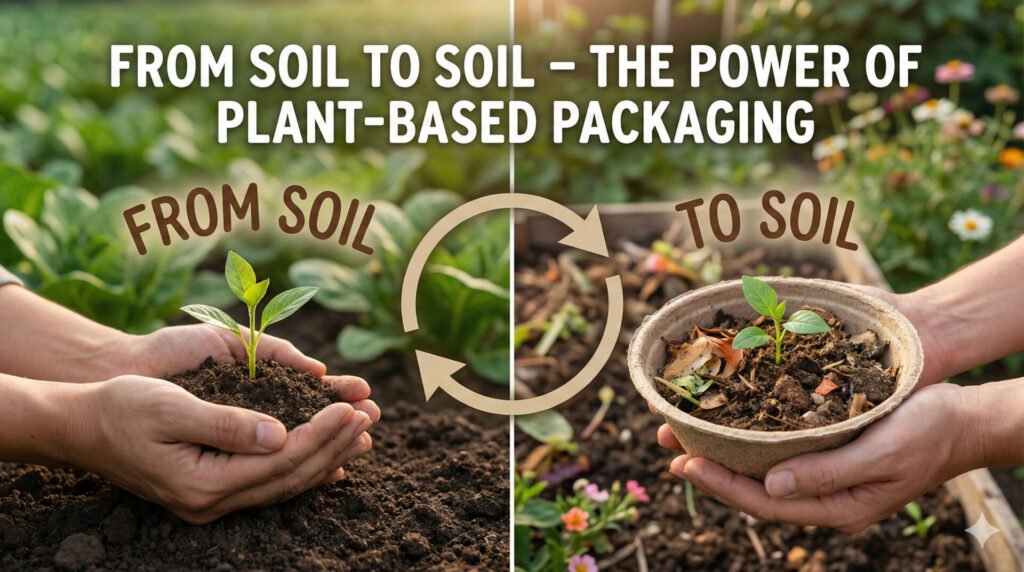
Soil Safe: When our bags decompose, the resulting biomass (humus) is safe for agriculture. You could literally use the compost from our bags to grow the tomatoes you buy from the market. This is Soil-to-Soil integrity.
4. The Timeline: Months, Not Centuries
We engineered our bags to have a specific lifespan.
5. Legal Peace of Mind for Businesses
For shopkeepers and factory owners in Madhya Pradesh, “Certified” means “Safe from Fines.” Authorities are cracking down on banned plastics. Using a generic “green-looking” bag is risky. Using an Avantika Bio Polymer bag—complete with its CPCB license number and QR code printed on it—is your shield. It tells inspectors immediately that you are a responsible, compliant business.
Conclusion: Purity You Can Verify
Trust is good, but certification is better.
At Avantika Bio Polymers, we adhere to the strictest environmental standards not because we have to, but because we want to ensure that when we say “Zero Waste,” we really mean it.
When you choose us, you aren’t just buying a bag; you are buying a guarantee. A guarantee that 180 days from now, your packaging won’t be clogging a drain or poisoning a river—it will be feeding a plant.