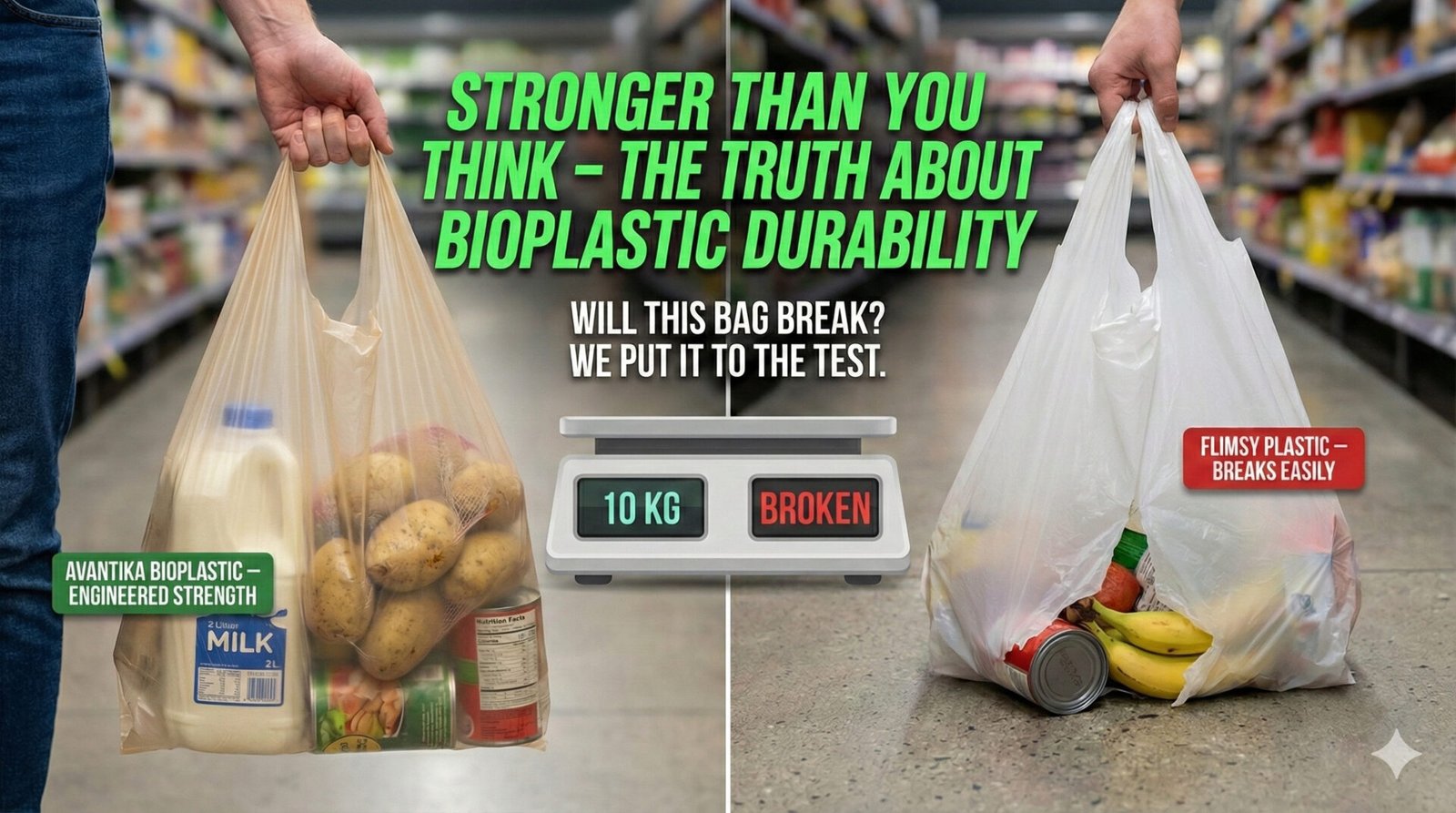
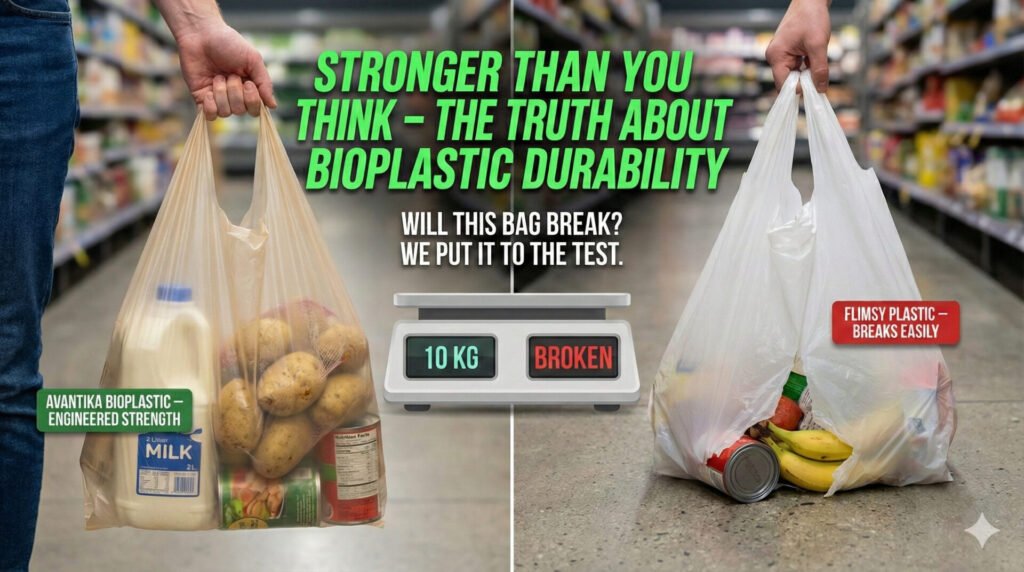
The Myth: “Eco-friendly bags are flimsy. If I put milk and potatoes in them, the bottom will fall out.”
The Reality: At Avantika Bio Polymers, we are here to bury that myth right alongside our compostable bags.
For a long time, sustainable packaging had a reputation for being weak. We’ve all been there—holding a paper bag in the rain as it disintegrates, or using an early-generation biodegradable bag that tears if you look at it wrong. But technology has moved on.
We didn’t just design a bag that helps the planet; we engineered a bag that can handle the heavy lifting of real life. Here is the science behind the “Heavy-Duty” promise of Avantika Bio Polymers.
When we create our biopolymer pellets, we aren’t just mashing up corn. We are creating a complex molecular blend.
Tensile Strength: This measures how much you can pull a material before it snaps. Our bags are formulated to rival the tensile strength of traditional High-Density Polyethylene (HDPE).
The “Stretch” Factor (Elasticity): The biggest enemy of a grocery bag is a sharp corner (like a cereal box or a milk carton). Paper bags rip because they have zero stretch. Avantika bags possess high elasticity. When a sharp object pushes against the side, our material flexes and stretches around it rather than tearing immediately.
One of the biggest weaknesses of other eco-alternatives (like paper or starch-only bags) is moisture.
The Scenario: You buy frozen peas, cold milk, or fresh wet vegetables. Condensation forms.
The Result: A paper bag turns to mush.
The Avantika Advantage: Our biopolymers are water-resistant during use. While they break down in composting conditions (which requires specific bacteria and heat over time), they are perfectly capable of holding wet items during your trip home without losing structural integrity.
We know that our customers range from Kirana stores in Ujjain to industrial units. A “one-size-fits-all” strength doesn’t work. That’s why we engineer for specific loads:
The Grocery Challenge: Our standard retail bags are tested to carry significantly more weight than the average shopper fills them with. 5kg of flour? 2-liter soft drink bottles? No problem. The handles are reinforced to distribute weight evenly, preventing that painful “digging in” sensation on your fingers while ensuring the loops don’t snap.
Industrial Liners: For our B2B clients, we offer heavy-duty liners. These aren’t just for trash; they are for logistics. They are puncture-resistant and designed to hold industrial waste or bulk materials without leaking.
Strength is often a game of thickness, measured in Microns.
Government regulations often mandate specific thickness to prevent flimsy, single-use plastics that fly away and clog drains.
Avantika bags are manufactured in compliance with these thickness standards (e.g., above 50 or 75 microns where required). This added thickness doesn’t just satisfy the law; it gives the bag a premium, sturdy feel that customers trust instantly.
It sounds contradictory, but a stronger bag is a greener bag. Why? Reuse.
If a bio-bag breaks after one use, it’s wasteful. Because Avantika bags are tough, you can:
Use them to bring groceries home.
Reuse them to carry lunch to work or store clothes.
Finally, use them as a wet-waste liner for your dustbin.
By maximizing the lifespan of the bag before it gets composted, you are getting the most value out of the resources used to make it.
You shouldn’t have to choose between saving the planet and getting your groceries home safely.
With Avantika Bio Polymers, you get the best of both worlds. We have taken the guilt out of plastic and put the muscle into bioplastic. So go ahead—load it up. We can handle it.
Embrace the future of packaging with Ujjain’s premier biodegradable solutions. Durable, plant-based, and compostable products designed for a cleaner India and a healthier planet.
Feel Free To Contact Us !
📍D-61, Tajpur Industrial Area, Maksi Road, Ujjain (M.P)
📧awantikabio28@gmail.com
📞8959455629,8305555629
2026 all rights reserved to Avantika Bio polymers.