In the conversation about saving the planet, we often hear phrases like “Eco-Friendly” and “Green.” But what do those words actually mean when you are holding a shopping bag? At Avantika Bio Polymers, we believe transparency is the key to trust. We don’t just want to tell you our bags are better; we want to show you what they are made of and why it changes everything.
The secret isn’t a complex chemical additive; it’s nature itself. Our products are derived from renewable plant resources—specifically Corn Starch and Vegetable Oils.
Here is the story of how we turn humble plants into durable packaging that returns to the earth naturally.
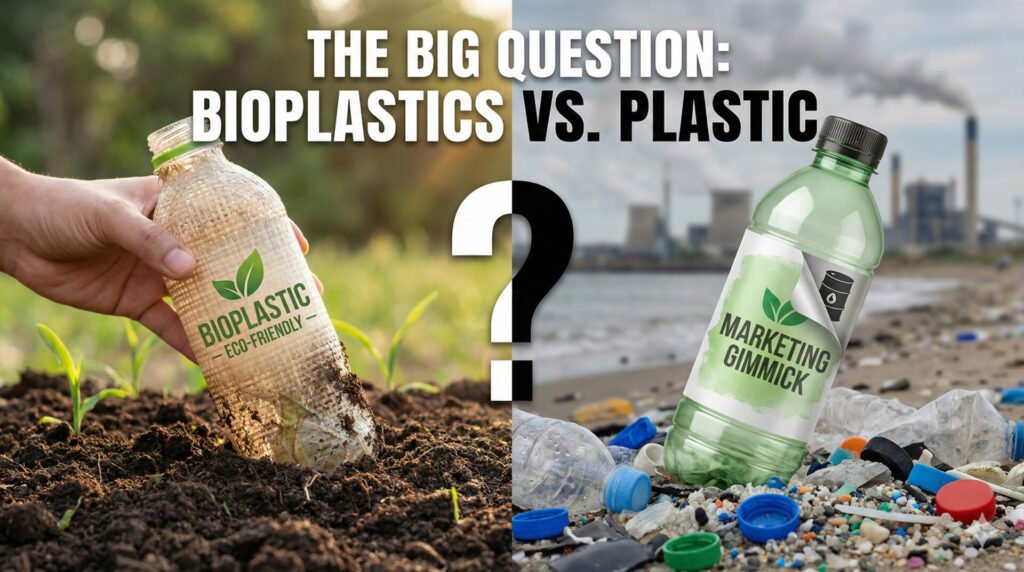
To understand the solution, we must look at the problem. Traditional plastics (PET, PVC, Polyethylene) are made from petroleum or natural gas. These are finite resources extracted from deep within the earth.
The Carbon Cost: When you extract oil and turn it into plastic, you are taking carbon that has been locked underground for millions of years and releasing it into the atmosphere.
The Indestructibility: Nature has no “digestive system” for synthetic polymers. A plastic bag dropped in a field today will still be there, breaking into micro-toxins, for centuries.
At Avantika, we have flipped the script. Instead of drilling for oil, we look to the farm. Our biopolymers are built using Renewable Resources.
“Renewable” means the material replenishes itself within a human timescale. You can grow a crop of corn every year. You cannot grow a new oil field.
You might know corn starch as a kitchen staple used to thicken soups. But in the world of bioplastics, it is a powerhouse.
How it works: Corn is rich in starch (a natural polymer). Through a process called fermentation and polymerization, we convert this starch into PLA (Polylactic Acid).
The Structure: PLA behaves incredibly like plastic. It can be molded, blown into films, and sealed. It is strong, transparent, and stiff.
The Benefit: Because it comes from a plant, the carbon inside the bag is the same carbon the plant absorbed from the atmosphere while growing. This makes the production process significantly lower in carbon footprint compared to oil-based plastics.
Pure PLA can be brittle. To make a flexible carry bag that can hold your groceries without snapping, we need to blend it with other biodegradable materials.
Replacing Petro-Chemicals: Traditional plastics use phthalates (toxic chemicals) to make plastic flexible. We replace these with derivatives from Vegetable Oils.
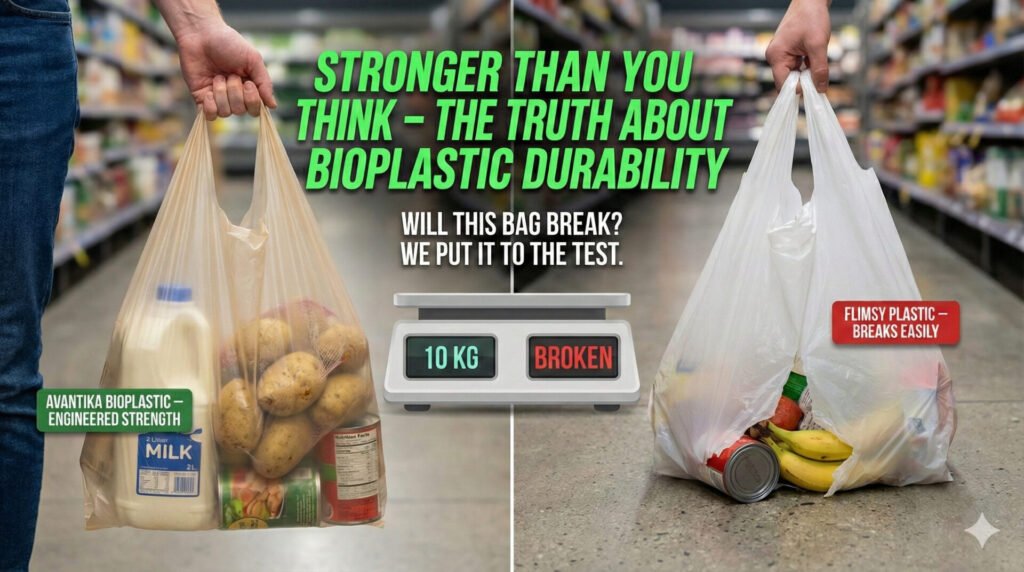
The Result: This gives Avantika bags their signature “soft-touch” feel and elasticity (stretchiness), ensuring they don’t tear under pressure, all while remaining 100% non-toxic and food-safe.
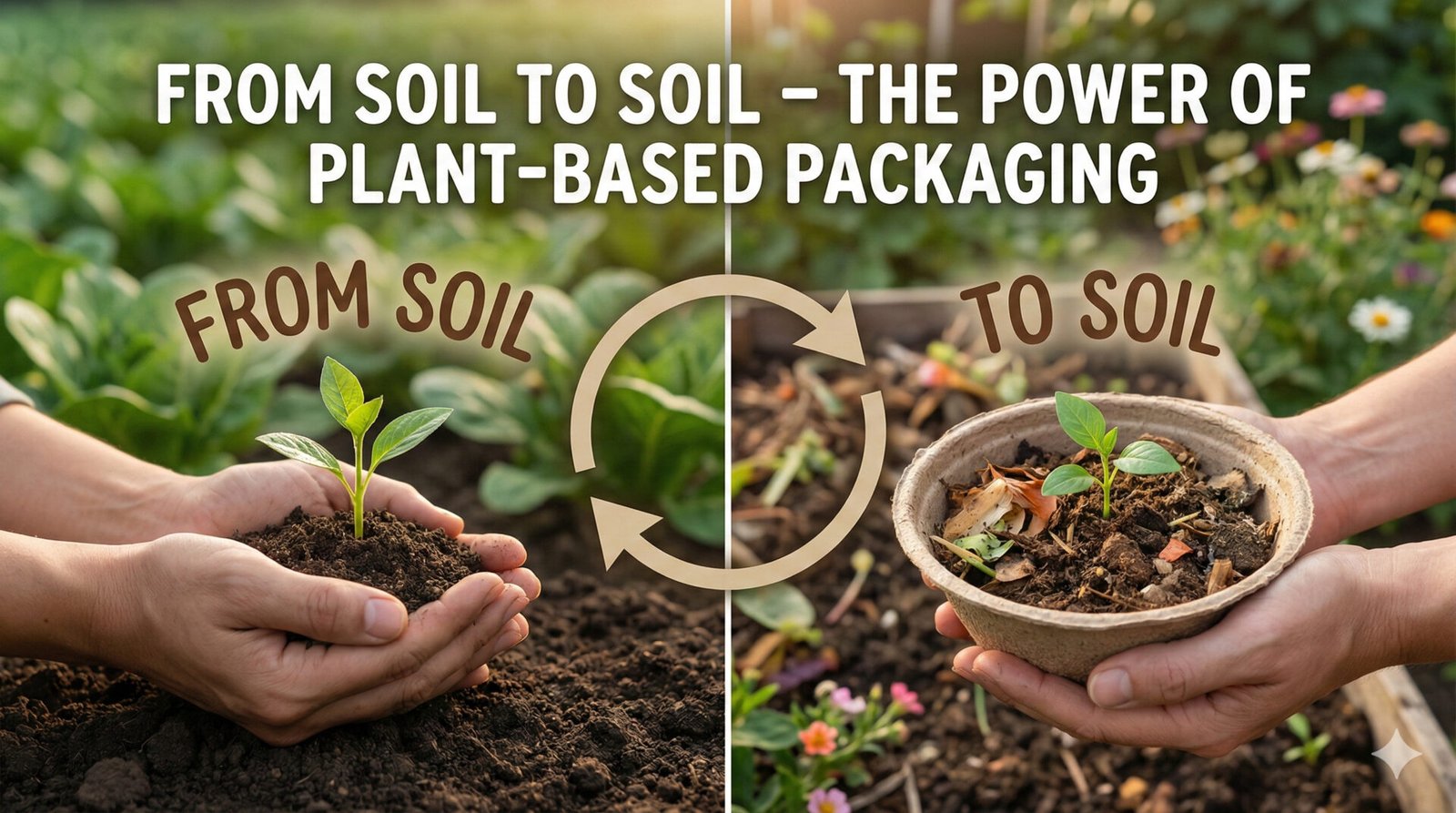
This is the most critical part of our material philosophy. Because our bags are made from materials that nature created, nature knows how to take them back.
The Decomposition Process: When you toss a conventional plastic bag, it fights nature. When you compost an Avantika bag, it cooperates with nature.
Moisture Absorption: Because our bags are made of plant starch, they are hydrophilic (they attract moisture). In a composting environment, water penetrates the bag’s structure.
Microbial Attack: Bacteria and fungi in the soil recognize the starch and vegetable oil components as “food.” They begin to feast on the material.
Mineralization: The bag breaks down chemically. It doesn’t turn into micro-plastic dust; it converts into Water, Carbon Dioxide, and Biomass (Compost).
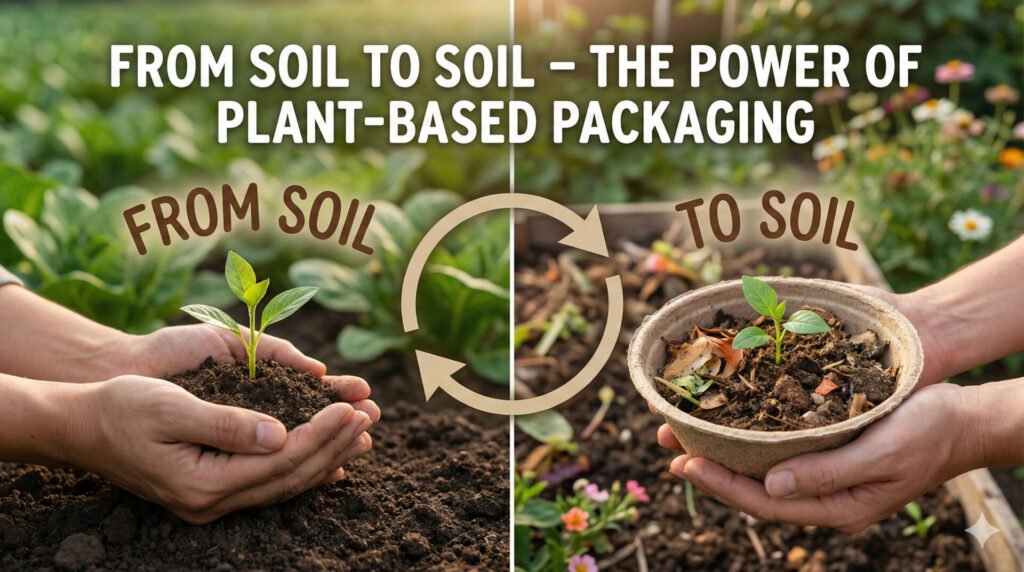
This biomass is nutrient-rich and can be used to grow more crops—perhaps even the corn that will make the next generation of bags. This is the Circular Economy.
Why should you care if your bag is made of corn or oil?
Safety: Our materials are naturally BPA-free and toxin-free. You don’t have to worry about harmful chemicals leaching into your food or vegetables.
The Legacy: By choosing plant-based materials, you are voting for farmers, not oil rigs. You are ensuring that the waste you generate today won’t be a burden for your children tomorrow.
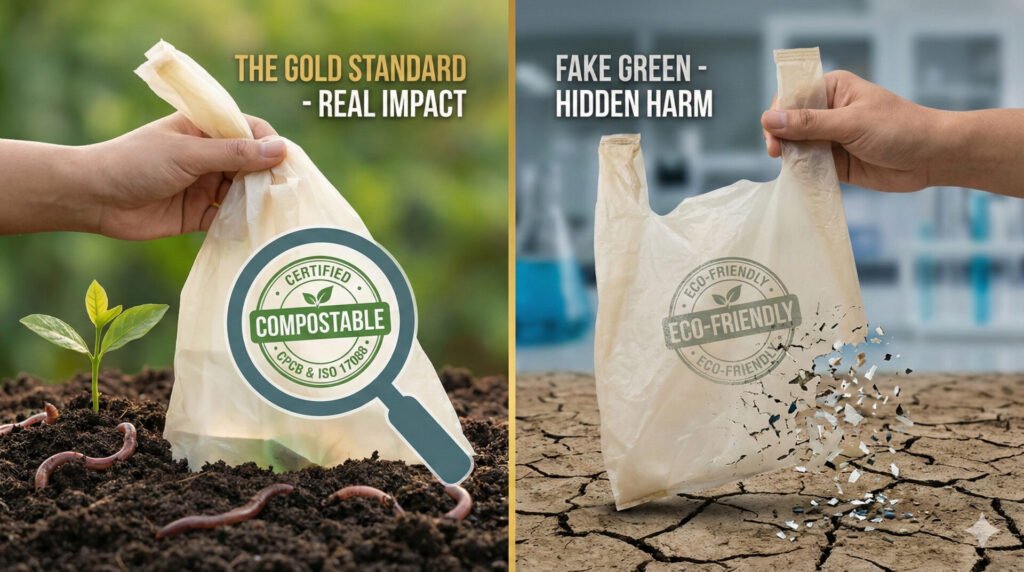
No Microplastics: Even if an Avantika bag accidentally ends up in the environment, it will eventually degrade without leaving permanent pollutants in the soil or water.
At Avantika Bio Polymers, we aren’t trying to reinvent the wheel; we are trying to heal the earth. By harnessing the simple power of corn starch and vegetable oils, we act as a bridge between modern convenience and ancient wisdom.
We are proud to say our products are grown, not mined.
So, the next time you pick up an Avantika bag, remember: you aren’t just holding a carrier for your goods. You are holding a piece of the future—one that starts in the soil and returns to it, leaving nothing but life behind.
Embrace the future of packaging with Ujjain’s premier biodegradable solutions. Durable, plant-based, and compostable products designed for a cleaner India and a healthier planet.
Feel Free To Contact Us !
📍D-61, Tajpur Industrial Area, Maksi Road, Ujjain (M.P)
📧awantikabio28@gmail.com
📞8959455629,8305555629
2026 all rights reserved to Avantika Bio polymers.