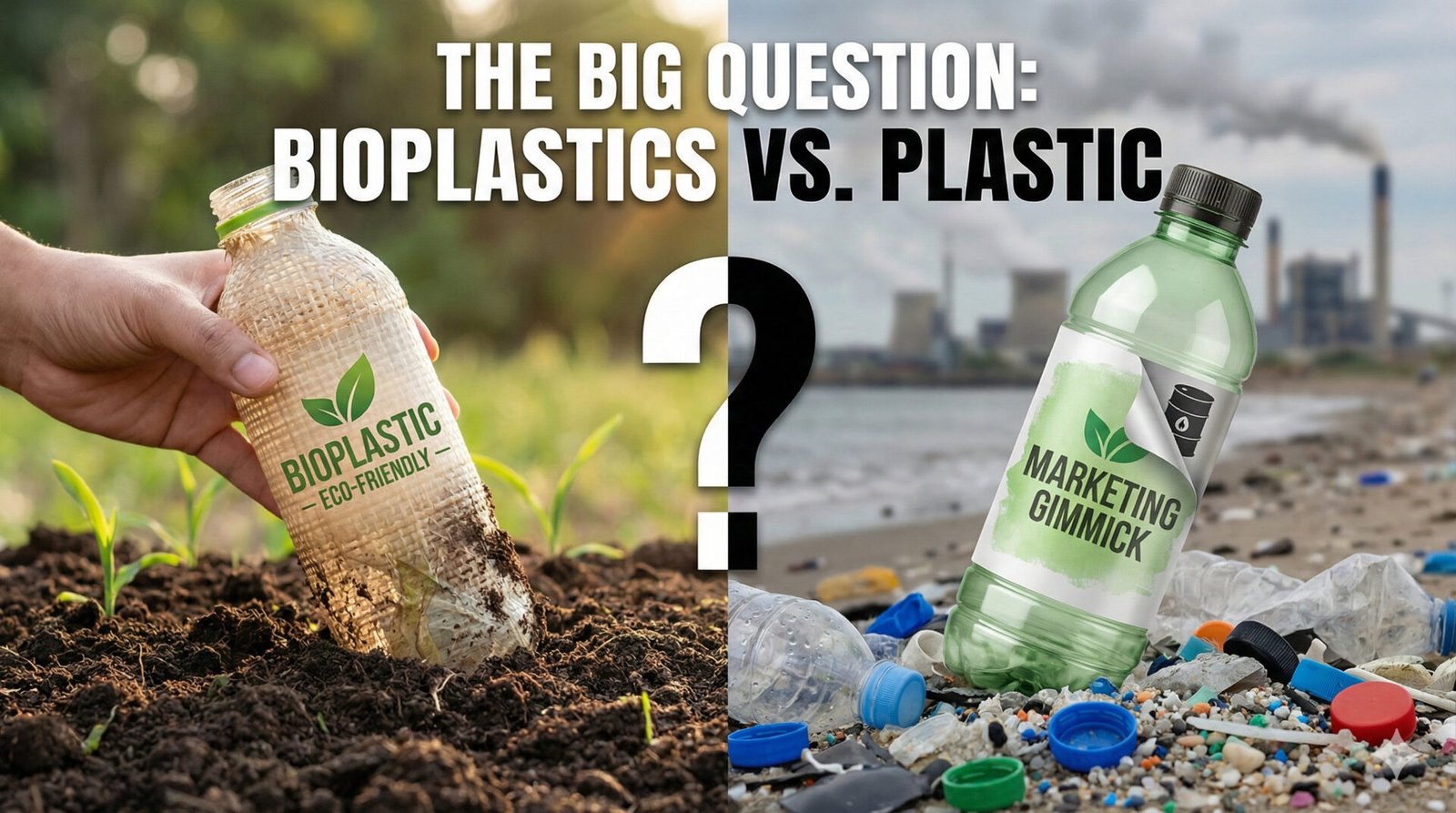
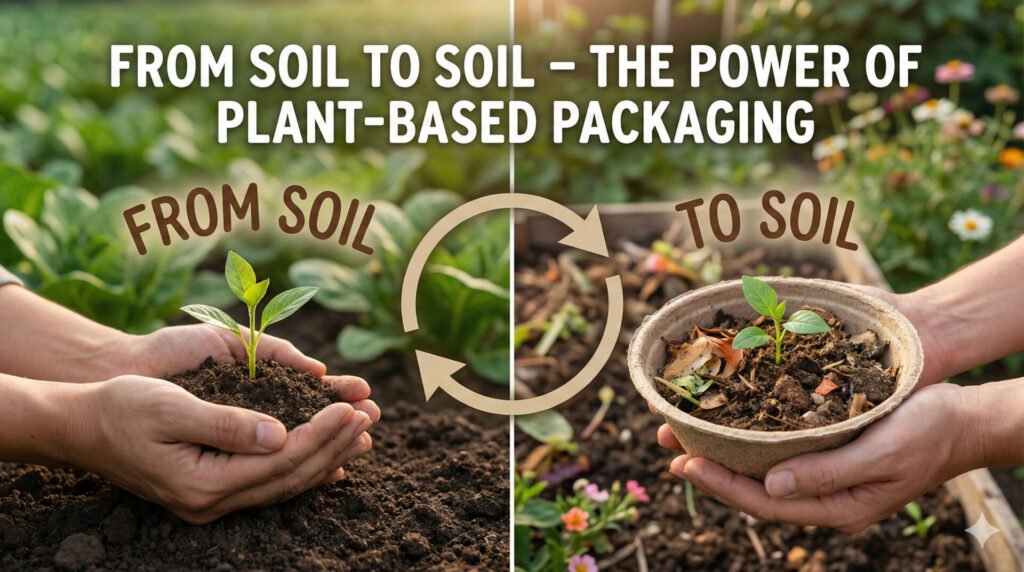
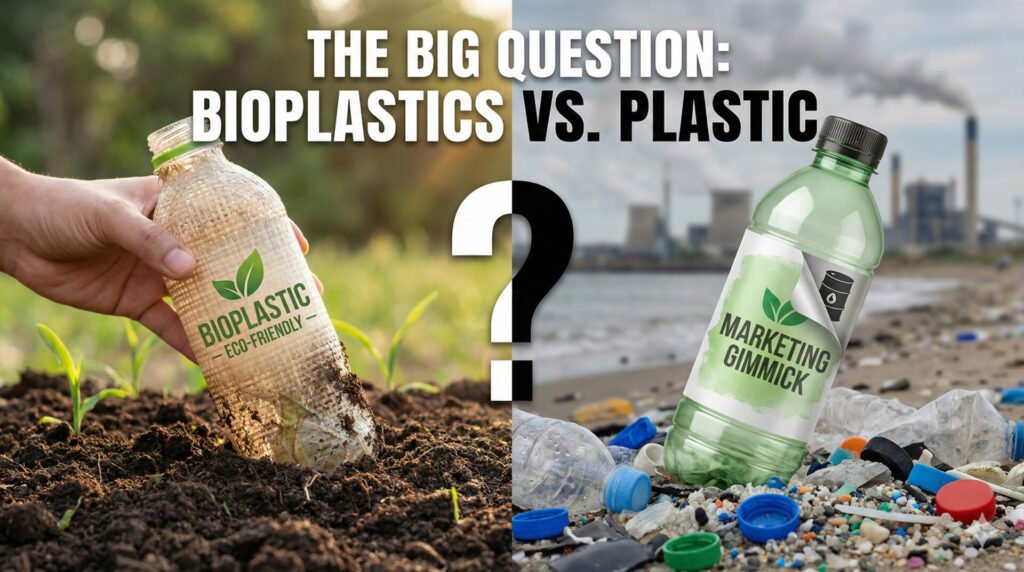
We live in an era where “Plastic” has become a dirty word. But imagine a material that acts like plastic—strong, flexible, waterproof—but behaves like a leaf when you throw it away. That is the promise of Biopolymers. At Avantika Bio Polymers, we often get asked: “Is this really different?” The answer is a resounding yes. Here is the deep dive into why.
1. The Source Code: Oil vs. Plants
Traditional plastic (Polyethylene/Polypropylene) is a byproduct of the petroleum industry. It involves drilling for fossil fuels, refining them, and creating long carbon chains that nature doesn’t know how to break down.
The Avantika Difference: Our bioplastics are made from renewable resources like corn starch, vegetable oils, and biodegradable polyesters. We are harvesting the sun’s energy stored in plants, not digging up ancient carbon.
2. The End of Life: centuries vs. Months
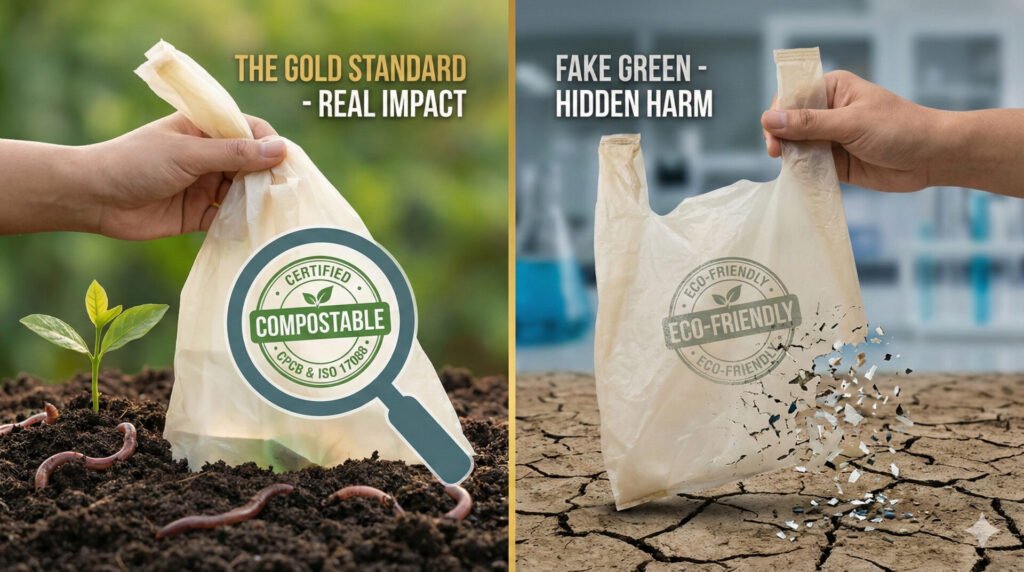
This is the most critical distinction. A regular plastic bag you use for 20 minutes will likely outlive your great-grandchildren. It doesn’t “go away”; it breaks into microscopic pieces called microplastics that enter our water and food chain.
The Bioplastic Reality: When our bags are placed in a composting environment (soil with the right bacteria and moisture), microorganisms see them as food. They eat the starch and break the bag down into water, CO2, and biomass. No microplastics. No toxicity.
3. The Performance Myth
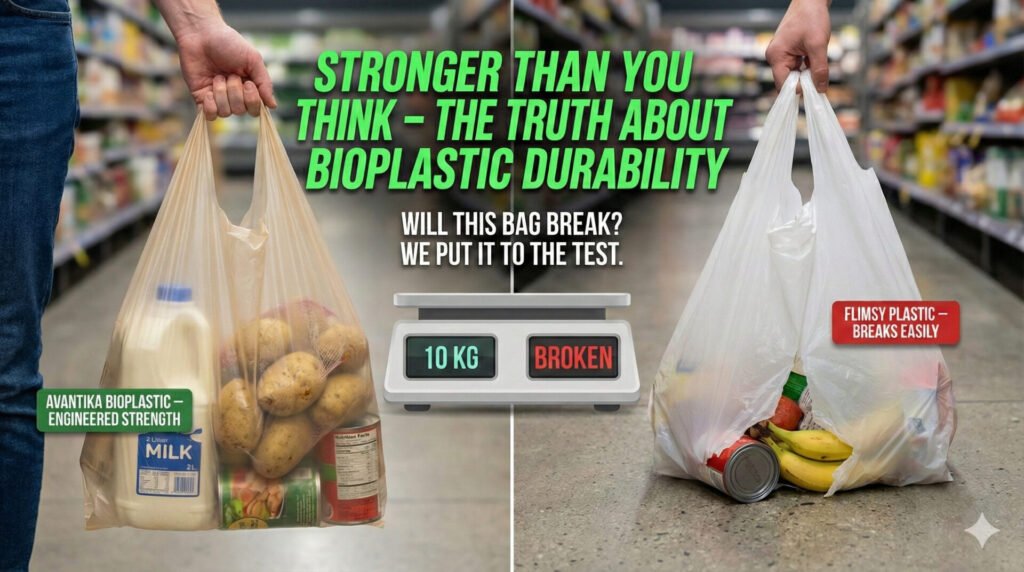
A common misconception is that “eco-friendly” means “weak.” In the early days, this might have been true. However, modern biopolymers have evolved.
Strength: Our industrial and retail bags are engineered to hold significant weight.
Shelf Life: They don’t start melting in your hand. They only degrade when exposed to specific microbial conditions in soil.
Conclusion:
Switching to bioplastics isn’t just about feeling good; it’s about breaking the cycle of pollution. It is a technological leap that allows us to keep the convenience of modern packaging without the guilt of eternal waste.